Solar Retinopathy: Eclipse Safety
Beware! Solar Energy Can Harm Your Eyes
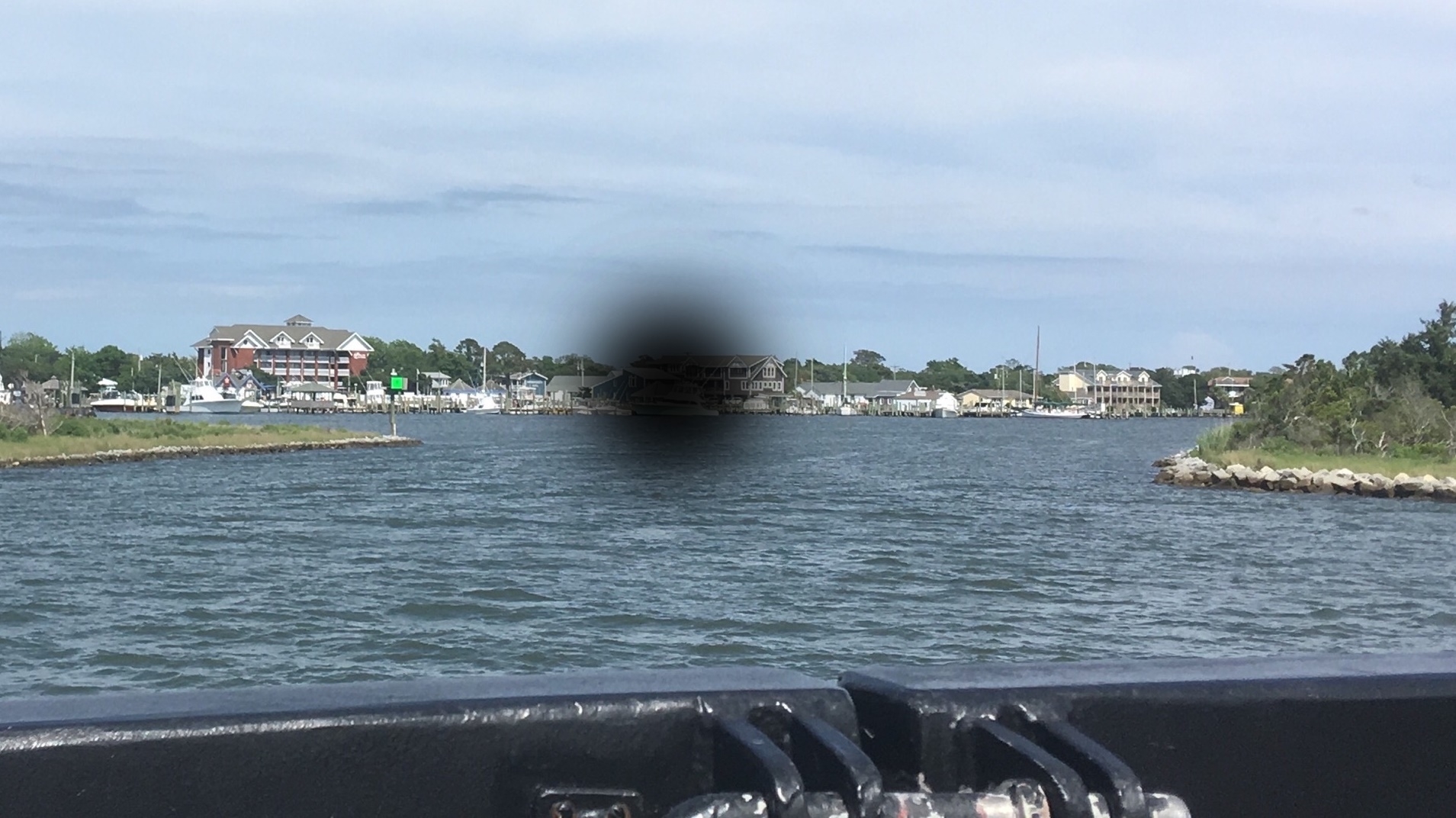
Solar retinopathy can cause a burn and a permanent blind spot that interferes with activities like reading. Photo courtesy of Jeffrey G. Gross, MD, FASRS
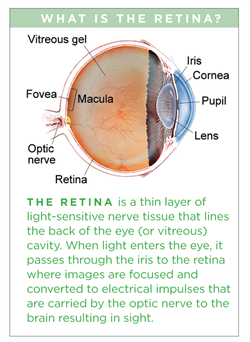
Viewing a solar eclipse without proper precautions or eye protection can be dangerous to the retina, the light-sensing tissue of the eye, potentially causing permanent blurred vision and/or blind spots (Figure 1).
Solar retinopathy is a condition that occurs when image-sensing photoreceptors are destroyed following initial damage to the retina and adjacent tissue. The injury is similar to thermal burns that can be caused by laser.
Depending on the extent of the injury, people have suffered temporary vision loss, residual blurring and/or distortion, or permanent vision loss.
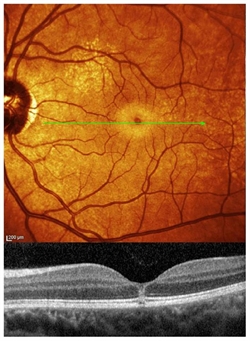
Figure 1. Retinal photograph and OCT scan image of solar retinopathy shows the characteristic orange-yellow spot at the center of the retina. The OCT shows full-thickness damage through the center of the fovea which may lead to loss of central vision. Photo courtesy of Robin Vora, MD
In some cases, exposure causes people to develop macular holes, which are perforations in the central retina (known as the macula) that is responsible for the sharp focus needed for reading and recognizing faces. Repair of a macular hole requires surgery (Figure 1).
Several documented reports exist of patients developing vision loss while viewing solar eclipses throughout the world, including Turkey (1976), Northern Europe (1999), the United Kingdom (2012), the Czech Republic (2015), and the United States and Canada (2017). Solar retinopathy occurs more commonly around the time of a solar eclipse, but can also occur due to incidents such as having a laser presentation pointer shined in the eye or from sun gazing due to psychiatric conditions or purposeful self-harm.
Tips for Safely Viewing a Solar Eclipse
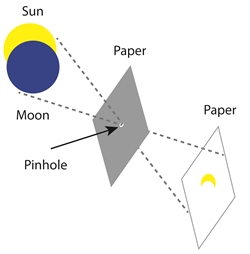
How it works Put a pinhole in the center of a white index card or sheet of paper. Turn your back to the sun and hold the index card up, allowing sun to beam through the hole, projecting a solar image onto a paper positioned in front of you. Alignment of surfaces is key; the farther apart, the larger the image appears. Positioning the paper in shade will enhance the image. No filters or shields are used. Remember NOT to look directly through the pinhole into the sun.
If you are in an area that will experience a total eclipse, it is relatively safe to look directly at the moon during “totality,” which is the brief minute or two when the moon obscures the sun completely. However, it is important to look away immediately as the first hint of sunlight emerges around the moon.
If you are in a location that will experience a partial eclipse, the safest and most common way to view it is with pinhole projection (see illustration at right).
For direct viewing of the sun during a partial eclipse, special filters are required. The easiest and least expensive option is to buy commercially available eclipse glasses manufactured specifically for solar observation. Consumers should be aware that NASA recommends protective eclipse glasses be International Organization for Standardization (ISO) 12312-2 certified (Figure 3). Another commercially available filter deemed safe for solar viewing is shade number 14 welder’s glass, which can be purchased at any reputable welding supply store. Always inspect your eclipse glasses or handheld viewer before use; if torn, scratched, or otherwise damaged, discard the device.

Figure 3. NASA recommends protective eclipse glasses be International Organization for Standardization (ISO) 12312-2 certified. |
Unsafe Filters
Unsafe filters include, but are not limited to:
- Camera lens, binoculars, or a telescope without a special-purpose solar filter secured over the front of the optics
- Sunglasses or smoked glass
- Color or black-and-white film and photo negatives such as X-ray film
- Polarizing filters or neutral-density films
Should you experience vision changes during or following the viewing of an eclipse, seek immediate consultation with an eye physician, such as an ophthalmologist or retina specialist.
A total eclipse of the sun is an incredible cosmic phenomenon that is rarely seen. If you’re lucky enough to be along its path and witness it, please use caution, but enjoy the show. The next total solar eclipse in the United States will take place August 23, 2044.