
Pete
Retina Specialist Helps Photographer Maintain Sight and Purpose After Geographic Atrophy Diagnosis

A lifelong photography enthusiast, Pete devoted decades to capturing landscapes across the world and even founded a photography club in his community. But two years ago, vision loss from geographic atrophy, an advanced form of dry age-related macular degeneration (AMD), forced him to set his camera aside.
“Giving up photography, driving, and bicycling were the hardest things I’ve ever had to face,” Pete said. “But I’m thankful to be living in a time when therapies are now available to help preserve my vision.”
A Family Connection and a New Diagnosis
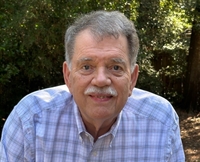
Pete had seen AMD up close long before his own diagnosis. His mother and aunt both developed the disease late in life, and his younger sister was diagnosed with geographic atrophy shortly before her passing. “I watched my mother, who loved to read, eventually switch to books on tape,” he said. “So when my own eyesight started changing, I had a sense of what I might be facing.”
About 10 years ago, Pete began having trouble seeing in dimly lit environments. A few years later, persistent difficulty with night driving led him back to his eye doctor, who referred him to ASRS member retina specialist James Major, MD. After comprehensive testing, Dr. Major confirmed the presence of geographic atrophy.
“At the time, there were no approved treatments,” Pete said. “Dr. Major explained what geographic atrophy was and told me we would monitor it closely, but he also said new therapies were in development. That gave me real hope.”
When the first FDA-approved treatment for geographic atrophy became available in 2023, Dr. Major recommended that Pete begin therapy right away. His sight continues to decline slowly, but he feels encouraged. “Before treatment, I was told I might lose most of my central vision within five years,” he said. “Nearly three years later, I still have enough vision to function—and that’s something I don’t take for granted.”
With many new advances in treatment on the horizon, people living with geographic atrophy can look ahead with hope, supported by retina specialists who are driving progress in treatment and care.
Adapting and Helping Others
Like many people with geographic atrophy, Pete has adapted creatively to the daily challenges of vision loss. He uses accessibility features on his iPad, carries small flashlights in dim restaurants, and has begun experimenting with emerging assistive technologies that help with reading, orientation, and identifying objects.
“There’s never been a better time to live with this condition,” he said. “Technology makes so much possible—from staying connected to managing tasks independently.”
Just as meaningful has been the support of others. Pete recently co-founded a low vision support group in his community through a partnership with a local church. “We had 18 people at our first meeting, and now have 35 low vision and blind members with eleven different vision conditions,” he said. “I tell everyone experiencing vision loss to stay hopeful because it’s not a death sentence, it just changes how you live."